
Lawn Care in
Tributary
New-build turf, fresh sod, and construction clay that needs opening up.
Typical lots
Compact modern lots, many with alley access and small rear yards
Common grass
New Bermuda and Zoysia sod, still establishing on most properties
Our route
Late-week route through the New Manchester corridor
New construction lawns have a specific problem
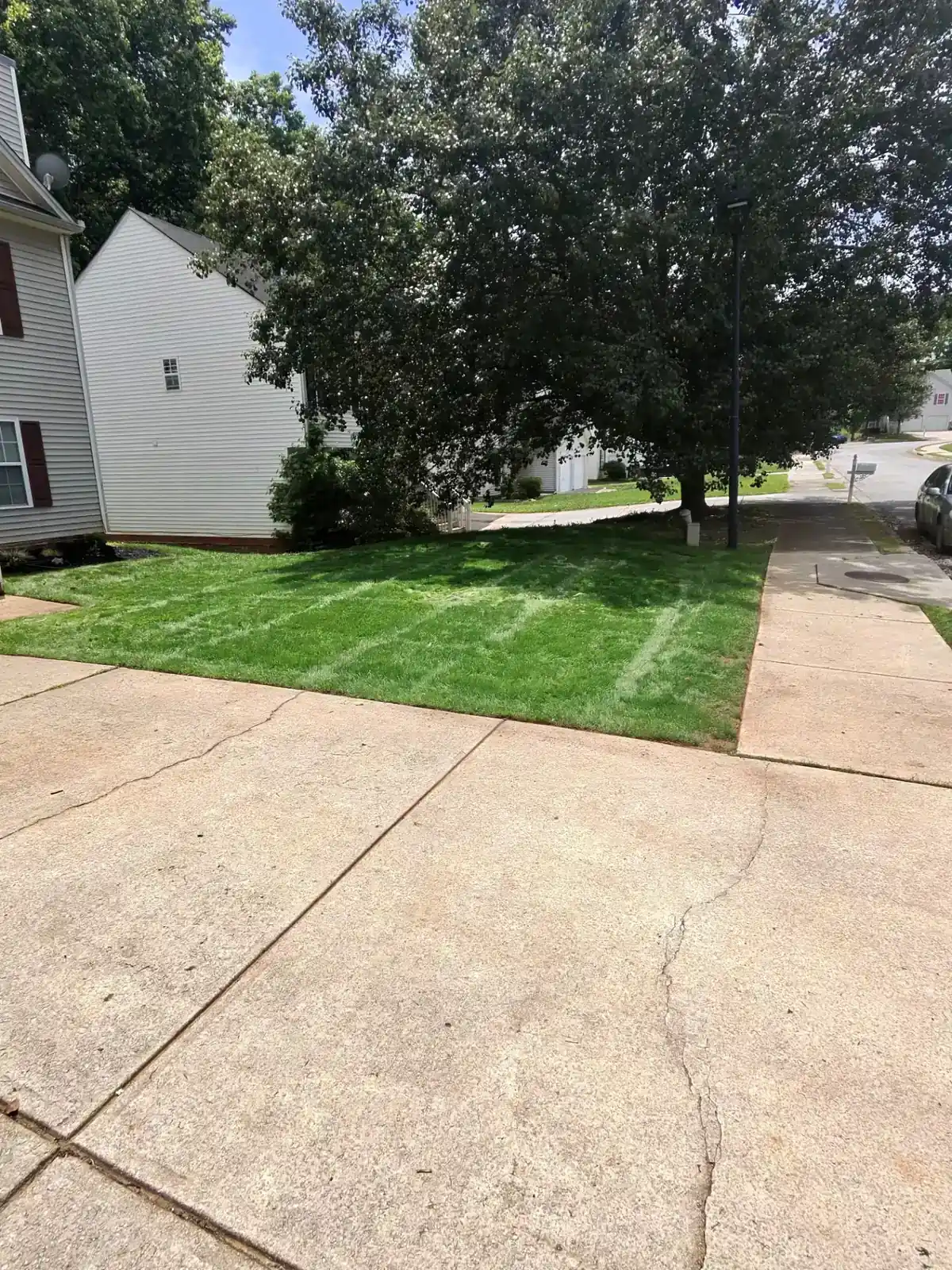
Tributary is one of the newest communities in Douglasville, and almost every lawn in it started life the same way: a builder graded the lot with heavy equipment, then rolled sod straight onto compacted subsoil. The grass looks perfect for one season. Then the second summer arrives and the yard goes thin in patches, water pools in the low spots, and the roots never make it down past a couple of inches because there's nowhere for them to go.
That's not a grass problem, it's a soil problem, and it's the single most common thing we fix in Tributary. Core aeration is the answer — pulling actual plugs out of that compacted clay so air, water and roots can move. On a new-build lot we'll usually recommend it in the first full growing season rather than waiting for the lawn to visibly decline.
Small yards, alley access, and tight equipment decisions
Tributary's layout is intentionally dense: modern lots, front porches close to the street, and a lot of homes served from rear alleys. It's a great neighborhood to live in and a genuinely awkward one to maintain if you're running oversized equipment. We size the mower to the property rather than forcing a big deck through a narrow side yard, and on the tightest lots we'll walk it rather than tear up a gate post proving a point.
Because so many rear yards here are small and partially fenced, gate width is one of the first things we ask about on an estimate. Anything under 36 inches means push-mower access, which takes longer, and we'd rather tell you that up front than surprise you with it later.
Establishing sod and holding a schedule
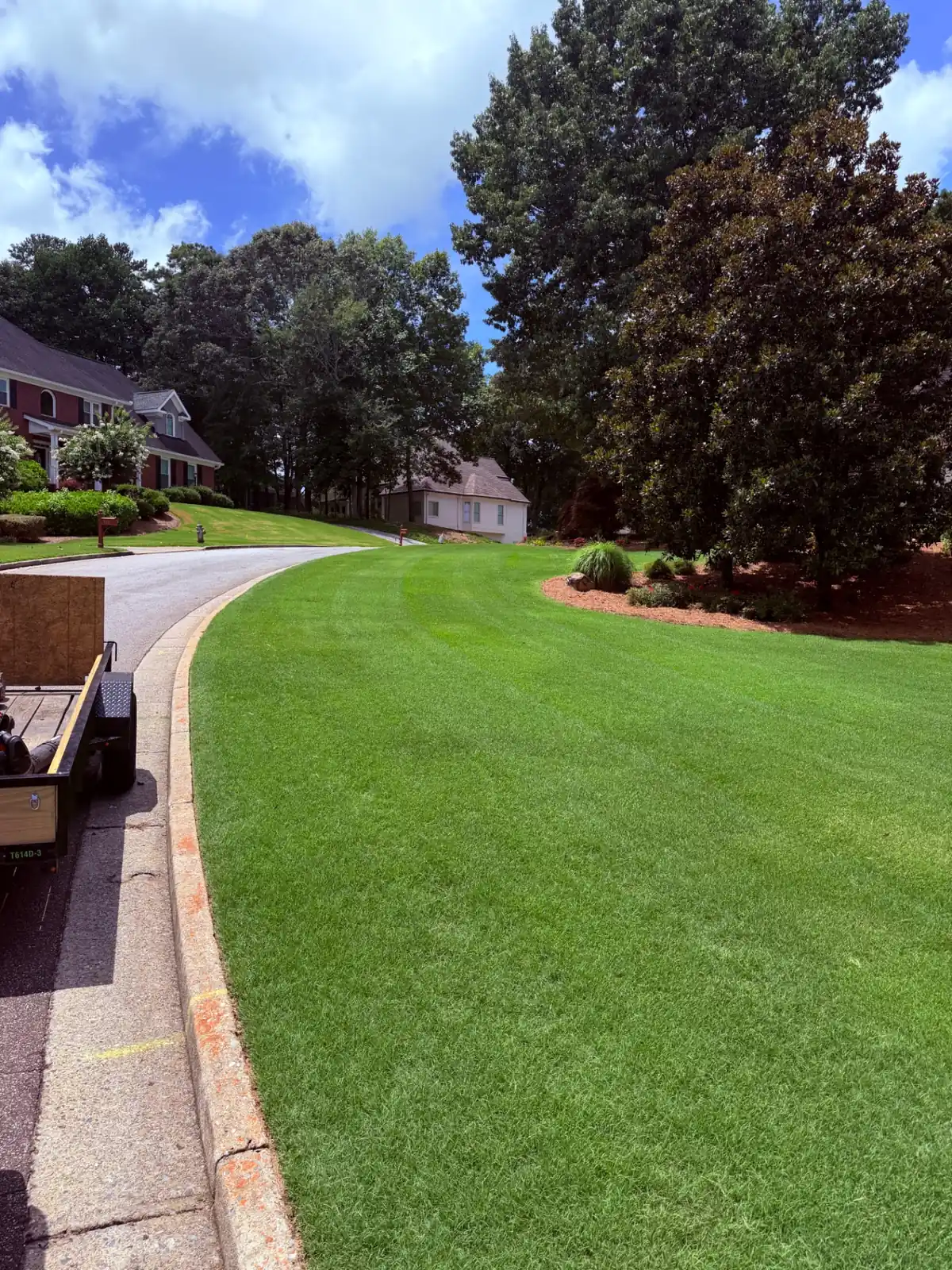
New sod needs consistency more than anything else. It needs to be cut at a height that doesn't stress it while the roots are still knitting in, on a predictable schedule, without long gaps where growth gets away from it. Weekly service helps manage new lawn growth. Bi-weekly service is also available; James reviews your property and selected plan before scheduling.
Tributary is also one of our fastest-growing routes, which works in your favor. The more homes we service on a given street, the less time we spend driving, and that's exactly how weekly maintenance stays at $50 to start. If your neighbors are already on our route, adding your lot is efficient for us and cheaper for you.
Services for Tributary homes
- Mowing
- Edging
- Grass Height Management
- Mulching
- Aeration
- Debris & Storm Cleanup
- Seasonal Cleanups
- Tree & Shrub Care
- Sod Installation
- Hardscaping
Tributary questions
My Tributary sod was just installed. When should you start weekly service?
Once the sod has knit in — usually about two to three weeks. We'll cut it high the first several visits while roots establish.
Do you handle the small rear yards off the alleys?
Yes. We size equipment to the lot and walk the tight ones rather than forcing a big deck through.
Is aeration worth it on a brand new lawn?
On a builder lot, yes — often more than on an old one. The subsoil under new sod is usually compacted by construction equipment.
We're already in Tributary
Weekly service starts at $50. Get your range in about a minute — James confirms the exact rate in person.
Get My EstimateOther Douglasville neighborhoods we serve
- Chapel HillsGolf-course lots, mature hardwoods, and a lawn standard the whole street holds to.
- Mirror LakeHOA-standard curb appeal on tight, high-visibility lots.
- Dorsett ShoalsBigger lots, longer frontage, and real slope to work around.
- Anneewakee TrailsA dense, family-heavy community where routes and referrals move fast.
- Bright StarEstablished homes, open acreage, and lawns with a long history.